
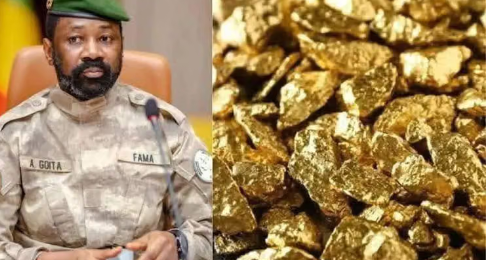
The plan offers the clearest indication yet of how Mali, Africa’s second-largest gold producer, intends to use proceeds from its revised mining framework to address infrastructure shortages across the landlocked West African country.
Speaking on state television at the weekend following the inaugural meeting of the Energy, Water and Transport Infrastructure Development Fund, Sanou said the fund had raised 109.14 billion CFA francs ($193 million) between January 2025 and June 2026.
Mali targets larger infrastructure financing
Since its creation in 2023, the fund has been financed entirely by mining permit holders through contributions equal to 1% of quarterly turnover and ad valorem taxes set at 1% during a mine’s first five years before rising to 2%.
Sanou said it generates at least 50 billion CFA francs annually, providing a predictable revenue stream that could support borrowing of up to 500 billion CFA francs for infrastructure development.
Infrastructure and Transport Minister Dembele Madina Sissoko said the proposed projects include railways, roads, vessels and schemes linked to state-owned Mali Airlines.
The initiative reflects a broader trend among resource-rich African countries seeking to channel mining revenues into long-term development rather than rely solely on commodity exports.
Ghana, the continent’s largest gold producer, approved a similar use of mineral income in 2025.
Mining reforms increase state revenues
The announcement follows Mali’s 2023 mining code, which increased royalties and expanded government stakes in mining ventures in an effort to raise public revenues from the country’s lucrative gold sector.
The reforms affected several international operators, including Canada’s Barrick Mining, and led to disputes over taxes, state participation and outstanding payments.
In December, government officials said an audit had uncovered 761 billion CFA francs in alleged arrears owed by mining companies, reinforcing Bamako’s push to tighten oversight of the sector.
Gold output expected to recover in 2026
Mali’s industrial gold production is expected to rise to 43.2 metric tonnes in 2026 from 42.2 tonnes in 2025, representing growth of about 2.4%, according to the country’s latest mining ministry plan.
The projected recovery follows a difficult year for the sector. Output fell by nearly 23% in 2025 from 54.8 tonnes in 2024, partly because of disruptions at Barrick Mining’s Loulo-Gounkoto complex during a prolonged dispute with the government.
Source: Africabusinessinsider