
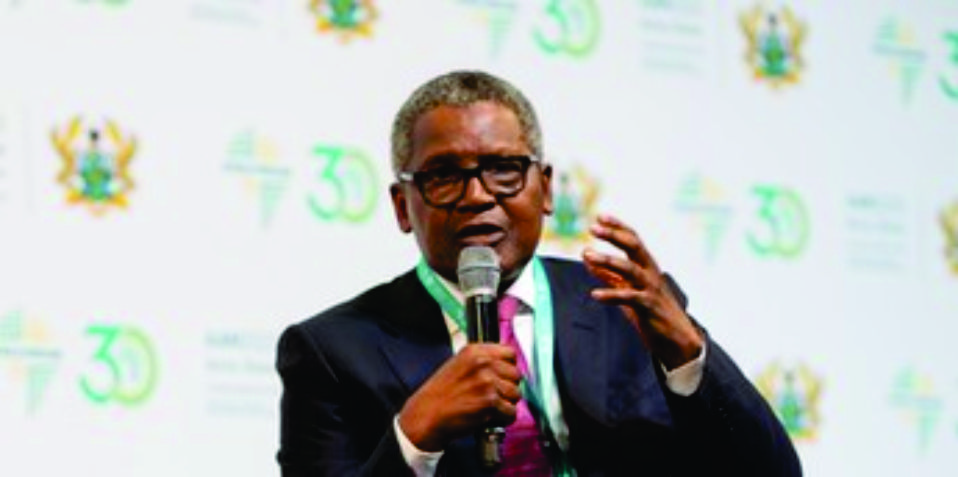
urgent one or two-day national retreat dedicated solely to resolving the country’s long-running power crisis.
The event, themed “From Policy to Productivity: Implementing Nigeria’s Industrial Future”, brought together senior government officials, development partners, and business leaders. President Bola Tinubu was represented by Vice President Kashim Shettima.
“One of the things that I want to advise Your Excellency… is to call a national forum where we will resolve the issues of power,” Dangote said.
His remarks come at a delicate moment for Africa’s largest economy, valued at roughly $500 billion based on current World Bank estimates. Nigeria is seeking to reposition itself as a manufacturing hub under its new industrial policy, yet erratic electricity supply continues to undermine productivity and investor confidence.
A recent five-day electricity supply disruption across parts of the country underscored the urgency of Dangote’s intervention. Between 12 and 15 February 2026, several power plants experienced gas constraints after maintenance work by Seplat Energy temporarily reduced supply, leading to nationwide generation shortfalls and load shedding.
His comments reflect broader concerns within Nigeria’s organised private sector about the impact of heavy import dependence, high interest rates, and infrastructure deficits. Stakeholders warn that cheap imports and dumping, combined with local structural constraints, are squeezing domestic manufacturers and contributing to inflationary pressures.
Dangote also highlighted the scale of private sector influence in Nigeria’s economy. According to him, the private sector accounts for nearly 90 per cent of gross domestic product, compared with about 10 per cent for government activity.
Dangote expressed cautious optimism about recent economic reforms, pointing to improved currency stability and renewed investor interest. He suggested that reducing import dependence and expanding local manufacturing would further strengthen the naira and generate employment.
Experts say the success of the National Industrial Policy 2025 hinges on resolving the electricity bottleneck. Without reliable power, ambitions to boost exports, reduce imports, and position Nigeria as a manufacturing gateway to African markets may remain out of reach.
For Dangote, the message was clear and urgent: fix the power sector first. Only then can policy translate into productivity, and ambition into sustainable growth.
Source: Africabusinessinsider