
The Trump administration’s military intervention in Venezuela is expected to radically reshape regional risk, including when it comes to the South American country’s territorial claims over a large, resource-rich area in neighboring Guyana.
The U.S. operation on Jan. 3 to oust Venezuelan President Nicolas Maduro and his wife, Cilia Flores, sent shockwaves across the globe, with many condemning Washington’s actions as a breach of international law.
President Donald Trump has shrugged off those concerns,
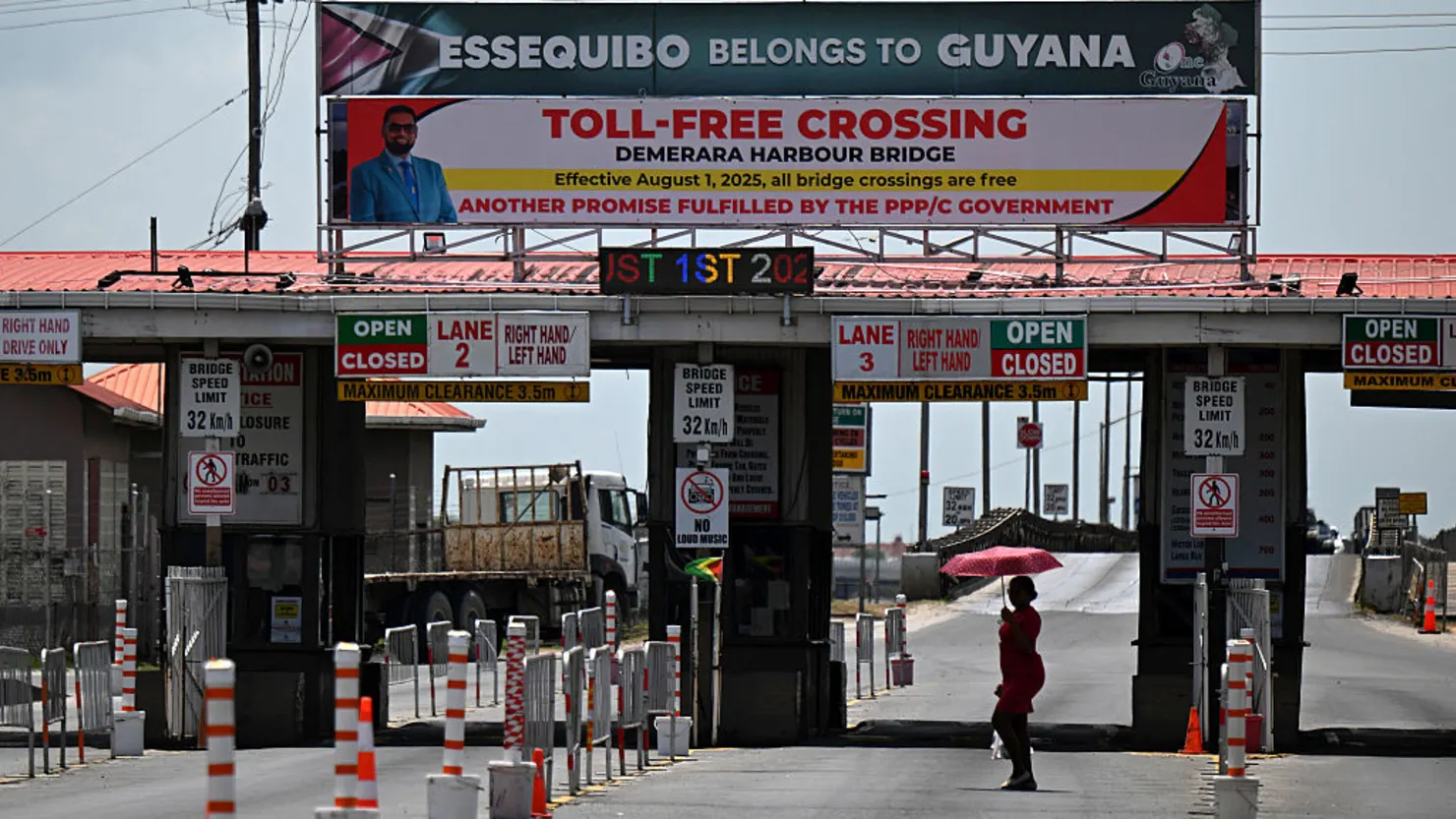
Regionally, the fallout from the U.S. intervention is set to put Venezuela’s longstanding claims over the Essequibo territory on ice, analysts told CNBC, a development that likely prompted a collective sigh of relief from the energy majors operating there.
Essequibo refers to a disputed area that constitutes around two-thirds of Guyana. It is known to be rich in natural resources, such as gold and diamonds, as well as vast offshore oil reserves.
U.S. oil majors Exxon Mobil and Chevron, as well as China’s CNOOC, are among some of the companies that operate in the offshore region administered by Guyana.
The U.S. president, who said Friday that he’d canceled a second wave of attacks on Venezuela, has been pushing for American oil companies to invest billions in the country to fully tap its expansive crude reserves.
Trump insisted a large “armada” of ships off the oil-rich country’s coast would help to protect U.S. investments.
Guyana has been transformed by an economic boom over the last decade.
A blockbuster discovery by Exxon Mobil in 2015 revealed vast reserves of high-quality crude in waters offshore Guyana, turning the small South American country of about 830,000 people into a major energy player with the world’s fastest growing economy.
The discovery caught the attention of foreign investors and oil majors, as well as neighbouring Venezuela, which claims sovereignty over the Essequibo region.
The dispute over Essequibo is more than a century old. In 1899, an international arbitral tribunal awarded the territory to Britain, when Guyana was still under its colonial rule. Venezuela has since actively disputed this. Maduro has previously accused Guyana, the U.S. and oil firms of robbing Venezuela of its territory through “legal colonialism.”
Guyana has maintained that the accord is legal and binding, and in 2018 the country had sought the International Court of Justice (ICJ) to rule it as such.
The ICJ also issued a binding order in May prohibiting Venezuela from holding elections in Essequibo, prompting Maduro’s government to reject the pronouncement. Caracas has repeatedly said it does not recognize the ICJ’s jurisdiction.
Venezuela’s Maduro has adopted an increasingly aggressive stance toward Essequibo in recent years, ratcheting up regional tensions.
In late 2023, for instance, Venezuela’s electoral authority announced citizens had approved a referendum called by Maduro’s regime to claim sovereignty over Essequibo, raising fears of a possible annexation attempt.
Source: CNBC