
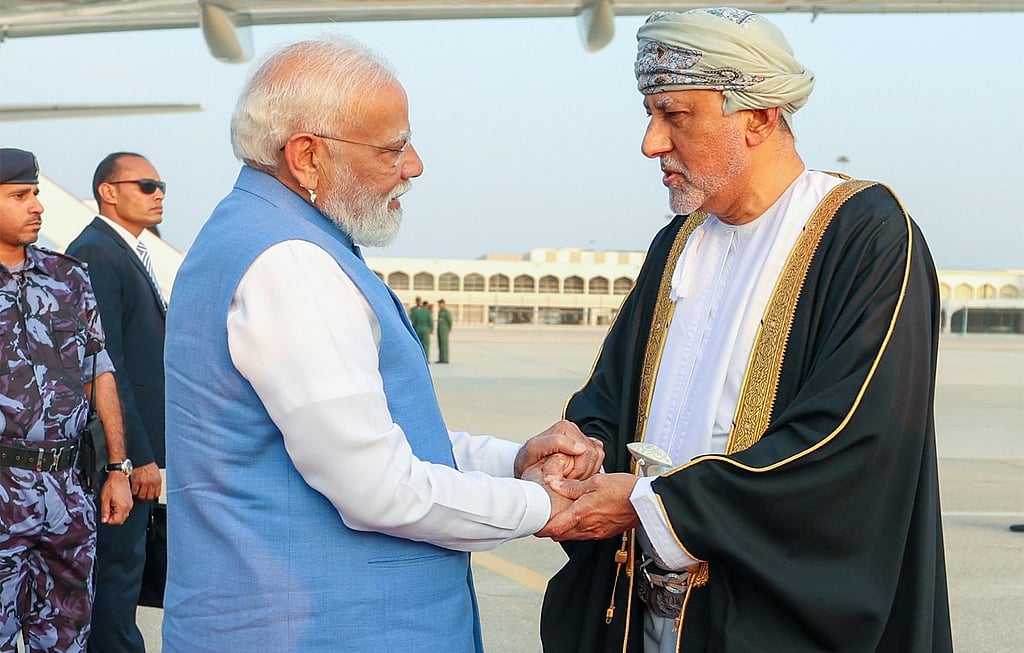
India and Oman have taken a significant step on Thursday towards deepening their economic relationship with the signing of a Comprehensive Economic Partnership Agreement, a move that is expected to substantially expand trade, investment and broader commercial engagement between the two countries. The agreement was signed in Muscat during Prime Minister Narendra Modi’s visit, underscoring the growing strategic and economic importance New Delhi attaches to the Gulf and wider Middle East region.
According to foreign trade experts, the pact marks a new phase in India–Oman relations, which have traditionally been anchored in energy cooperation, maritime links and a strong people-to-people connect. By moving towards a comprehensive trade framework, both countries have signalled their intent to diversify economic engagement beyond hydrocarbons and create new avenues for businesses on either side.
The agreement is expected to reduce or eliminate tariffs on a wide range of goods, ease market access, and provide a more predictable and transparent framework for trade and investment flows, they say.
As of the most recent data, bilateral trade between India and Oman stands at around $10.5 billion in the 2024–25 period, up from roughly $8.95 billion the previous year, reflecting steady growth in commerce between the two nations. India’s exports to Oman were valued at about $4.1 billion, with petroleum products such as naphtha and petrol, machinery, aircraft, rice, iron and steel articles, beauty and personal care products and ceramics among the key export items.
India’s imports from Oman, valued at over $6.5 billion, are heavily concentrated in energy and industrial inputs such as crude oil, liquefied natural gas and fertilisers, which together make up a large share of the trade value. Beyond energy, imports include chemical feedstocks and other raw materials that support India’s agricultural, chemicals, cement and power industries. The trade relationship also spans sectors like textiles, electronics, machinery, petrochemicals and automotive components, and the fresh CEPA is expected to broaden this engagement by improving market access and reducing trade barriers on a wide range of goods and services.
For India, the partnership with Oman is strategically important. Oman sits at a crucial crossroads of global trade routes, with proximity to key shipping lanes linking Asia, Africa and Europe. Strengthening economic ties with Muscat not only enhances India’s footprint in the Middle East but also supports its broader objective of securing supply chains, expanding export markets and building resilient trade partnerships in a volatile global environment. The agreement is expected to benefit Indian exporters in sectors such as engineering goods, textiles, pharmaceuticals, food products and services, while also encouraging Indian companies to invest in logistics, manufacturing and infrastructure projects in Oman.
Source: newindianexpress