
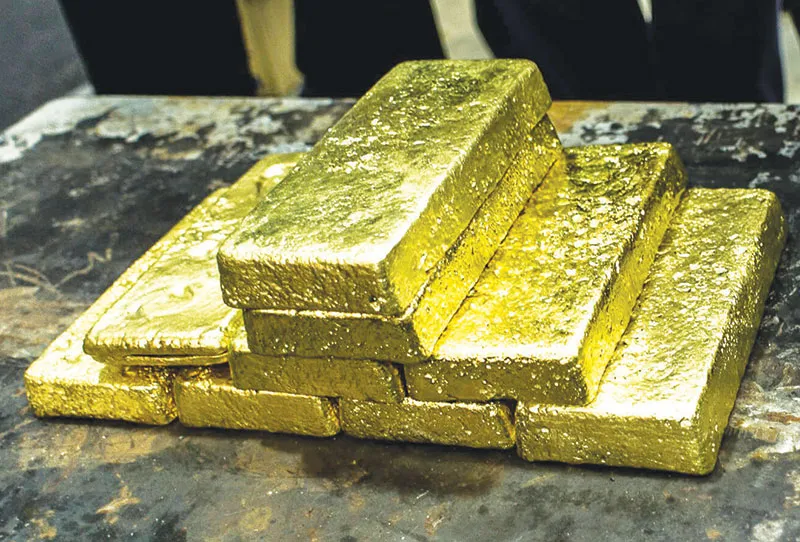
Uganda’s largest export, gold, has this year hit an all-time high, peaking at US$4,379 an ounce in October 2025.
This worldwide gold rush is attributed to an increase in central banks’ purchases of the metal. According to the World Gold Council, gold purchases have gone up by over 104 per cent in the last three years.
The surge in the price of the precious metal took off when President Trump slapped a 100 per cent tariff on China, starting a trade war. In retaliation, China, well aware that the US dollar is indirectly pegged to gold at $35 an ounce, embarked on a campaign to drive up the price of the metal.
One way to collapse the greenback is by driving the price of gold up. Gold and the US dollar have an inverse relationship; when one goes up, the other drops. To Uganda, the yellow metal brought in its highest revenue ever, in the financial year 2024/25, raking in $4.2 billion, as attested by the Bank of Uganda (BoU).
What should be celebrated as a blessing for the local economy is turning into a curse because Uganda doesn’t have the necessary structures to stockpile gold. In the central bank’s annual report released in October 2025, the document reads: “In the coming year, the Bank plans to start gold purchases to diversify reserves.”
This same position was taken by BoU in 2024 when it revived its gold purchase program. The central bank hasn’t stored up any gold yet, pushing the initiative to the coming year.
Nonetheless, Uganda has exported 160,617 kilograms of gold in the last five years, as recorded by the central bank. Traditionally, gold is a major component of a country’s foreign exchange reserves, because it helps stabilise currencies.
According to BoU, Uganda’s reserves rose from $3.2 billion — 3.1 months of import cover, to $4.2 billion — 3.9 months of import cover in the previous year. Although the reserve’s expansion is commendable, its being dominated by the US dollar is risky.
This year alone, the US Federal Reserve has moved from the dollar to gold as its top reserve asset. Gold was the US top reserve asset in the 1940s. Even the world’s largest economy’s confidence in their own currency is waning.
In the past year alone, the US dollar has dropped in value against the Uganda shilling by 3.4 per cent. In theory, this scenario is meant to favour Uganda by reason of goods from the US becoming slightly cheaper.
However, Uganda’s imports from the US in the last decade total up to $ 1.2 billion, making the gains negligible. Instead, the economy is exposed to inflation because of the reduced purchasing power of the reserves and overall economic instability.
Source: Observer.ug