
Just last week, reports indicated that Egypt and Qatar signed a new agreement to boost the supply of liquefied natural gas (LNG) and expand energy co-operation.
The agreement creates a framework for joint investments and technology partnerships in the areas of gas processing, discovery, and broader energy infrastructure.
Following up on this, the North African country recently finalized a deal with Norway and China to initiate two major renewable energy projects.
The Norwegian firm is slated to supervise the first project called “Energy Valley,” which will be situated in the Minya Governorate.
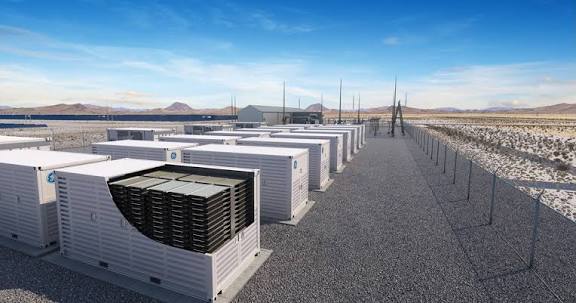
Four gigawatt-hours (GWh) of Battery Energy Storage Systems (BESS), strategically distributed across Minya, Qena, and Alexandria, will be incorporated into the 1.7-GW solar power facility.
As per the second agreement, China’s Sungrow will build a battery storage production facility in the El-Sokhna industrial region, which is a part of the Suez Canal Economic Zone (SCZONE), within the Tianjin Economic-Technological Development region (TEDA), Egypt zone.
The plant, which occupies 50,000 square meters (sqm), will be the first to produce BESS in the Middle East and Africa, as seen on Egypt Oil&Gas.
Production is expected to begin in April 2027, and at full capacity, it is intended to have an annual production capacity of 10 GWh.
The General Authority for SCZONE and the Ministry of Electricity and Renewable Energy are partnering together to oversee both projects.
The initiatives are in line with the country’s goals to increase the volume of renewable energy in the country’s electrical mix to above 42% by 2030 and 60–65% by 2040.
This objective is underscored by a landmark agreement Egypt concluded with Israel last year, which represents the largest such transaction in the nation’s history.
Under the terms of the agreement, Egypt would receive gas from the Leviathan field, which is located offshore in the Mediterranean and has reserves of almost 600 billion cubic metres.
The historic agreement covers the delivery of about 130 billion cubic metres of natural gas until 2040, or until the stipulated volumes are entirely delivered.
Source: Africabusinessinsider