
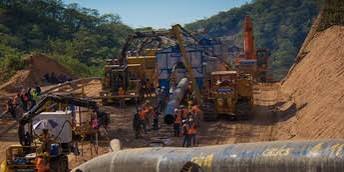
Uganda and Tanzania say crude oil exports from Uganda’s long-delayed petroleum sector are expected to begin in October, marking a pivotal moment for East Africa’s entry into global oil markets.
The East African Crude Oil Pipeline (EACOP), which runs 1,443 kilometres from Uganda’s Albertine Graben to the Indian Ocean port of Tanga in Tanzania, was about 75% complete as of the end of December 2025, according to officials from both countries.
That estimate aligns with figures released earlier by Uganda’s Petroleum Authority, which said nearly three-quarters of the $5 billion project had been completed by November last year, with all pipeline segments already laid and $3.3 billion invested.
Energy ministers from Uganda and Tanzania reaffirmed their commitment to the project during a high-level stakeholder meeting in Dar es Salaam on January 5, where they reviewed progress on pipeline construction, above-ground installations and the marine export terminal at Tanga.
Officials said construction activities are now at peak levels, with start-up readiness targeted for July 31, 2026.
Uganda’s delegation was led by Energy Minister Ruth Nankabirwa, alongside officials from the Uganda National Oil Company and the National Petroleum Council.
Once operational, EACOP will be the world’s longest heated crude oil pipeline, designed to transport Uganda’s waxy crude at around 50 degrees Celsius.
At full capacity, the pipeline is expected to carry up to 230,000 barrels of oil per day to Tanga, where it will be loaded onto tankers for export.
For Uganda, the pipeline is key to unlocking its estimated 6.5 billion barrels of crude reserves and establishing itself as a new oil producer in Africa.
The project’s success, however, will depend on global oil prices and the timely completion of related upstream infrastructure.
The pipeline’s benefits extend beyond Uganda’s borders. For Tanzania, EACOP is shaping up as an economic and logistical lifeline.
Authorities say the project has already generated about 50 billion Tanzanian shillings ($19.5 million) in revenue through development levies, taxes and construction-related charges.
Source: Africabusinessinsider