
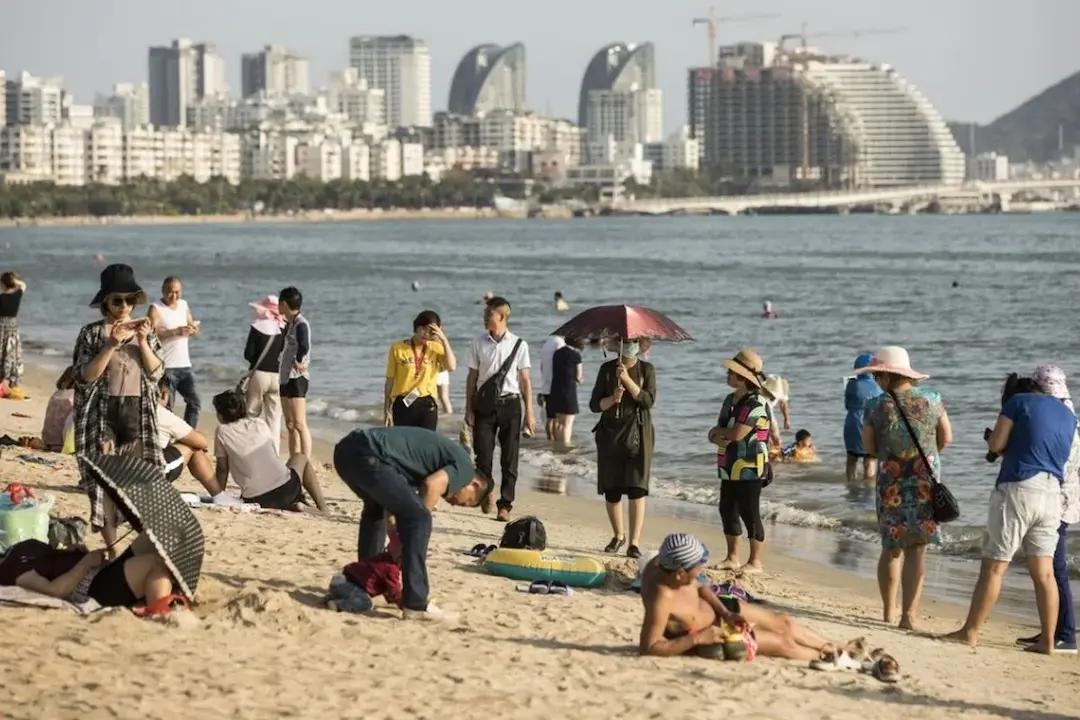
China on Thursday split off a Belgium-sized island with an economy comparable to a mid-sized country from the mainland for customs processing, part of a bid to join a major trans-Pacific trade deal and establish a new Hong Kong-style commercial hub.
Officials hope that turning the southern province of Hainan into a duty-free zone will spur foreign investment, with goods that achieve at least 30% local value add able to move on into the world’s second-largest economy tariff-free. Foreign firms will also be able to operate in service sectors that are restricted on the mainland.
China is also seeking to boost its free-trade credentials to convince members of one of the world’s largest free-trade deals, the Comprehensive and Progressive Agreement for Trans-Pacific Partnership (CPTPP), that it can meet the bloc’s high standards for trade and investment openness through pilot projects such as the Hainan Free Trade Port.
“It is also expected to provide a huge boost for free trade that has been impacted by rising protectionism and unilateralism in recent years,” the article added, in a veiled swipe at US President Donald Trump’s tariffs, which have pushed policymakers to diversify China’s US$19 trillion economy from the world’s top consumer market and take steps to further consolidate the manufacturing juggernaut’s role in global supply chains.
China’s leaders have made reversing a drop in investment a priority for next year, seeking to shift the economy from its current reliance on stimulus toward a dual focus on consumption and investment to stabilise growth in the near-term, while officials evaluate undertaking painful structural reforms needed to rebalance the economy long-term.
Foreign direct investment into China fell 10.4% year-on-year in the first three quarters of 2025, official data shows.
Hainan’s GDP stood at US$113 billion last year, official data shows, the equivalent of the world’s 70th largest economy, according to World Bank Data. Even so, it is far short of Hong Kong’s US$407 billion economy.
“The Hainan model basically offers managed liberalisation that will be great for reintegrating supply chains, yet it lacks the legal system and financial openness Hong Kong boasts,” said Xu Tianchen, senior economist at the Economist Intelligence Unit.
Source: theedgemalaysia