
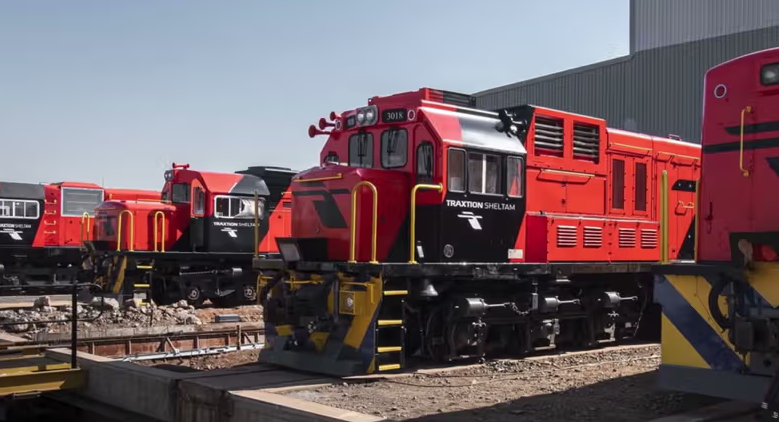
The deal includes the acquisition of 46 diesel-electric locomotives sourced from New Zealand’s KiwiRail, marking a major vote of confidence in South Africa’s rail reforms.
According to a statement issued by Traxtion, CEO James Holley said the investment reflects the company’s confidence in the direction of government-led rail reforms, particularly as Transnet opens the national network to private operators.
“The programme, comprising R1.8 billion in locomotives and R1.6 billion in wagons, is the largest private freight rail investment in South Africa’s history in terms of fleet size and value, with a minimum 60% local content target and 662 direct jobs projected during build and deployment.” the company noted.
Traxtion, with 38 years of experience operating across 10 African countries, is making its first foray into South Africa’s rail sector, previously dominated by Transnet.
The company runs 55 locomotives and maintains over 100 locomotives and 450 wagons daily. Its R3.4 billion investment includes R1.8 billion for locomotives and R1.6 billion for wagons.
Holley said the availability of KiwiRail’s locomotives, replaced as part of its own fleet renewal, created a rare opportunity for Traxtion to secure high-quality narrow-gauge units suited to southern Africa.
The locomotives will be upgraded in partnership with Wabtec, a leading global manufacturer of diesel-electric rail technology.
South Africa’s rail sector, long burdened by inefficiencies, has emerged as a target for private capital as the government accelerates reforms aimed at easing logistics bottlenecks.
With a network of 20,986 km, South Africa has the largest railway system in Africa, making it an ideal destination for investors in the rail sector.
With Transnet currently moving 160–165 million tons of freight annually against demand exceeding 250 million tons, the need for additional capacity is urgent, according to Business Tech.
Holley said the deal will also support local industry, with 79% of the contract value directed to South African companies and roughly 60% translating into direct local content. The project is expected to create 662 direct jobs, with a broader economic multiplier across the supply chain.
Source: Africabusinessinsider